From Jakarta to Arkansas: How small businesses are supporting climate resilience and sustainability around the globe
Mastercard Strive ―
How small businesses worldwide are using data, digital tools, and green financing to drive climate resilience and build a more sustainable economy.
Desmond Tutu said it best. “Do your little bit of good where you are; it’s those little bits of good put together that overwhelm the world.” This is especially true for small businesses, which play a crucial role in contributing to a more sustainable environment. Micro- and small businesses make up the majority of businesses around the globe and are key drivers of economic growth. Yet they are also disproportionately vulnerable to climate impacts, which can further hinder their growth and resilience.
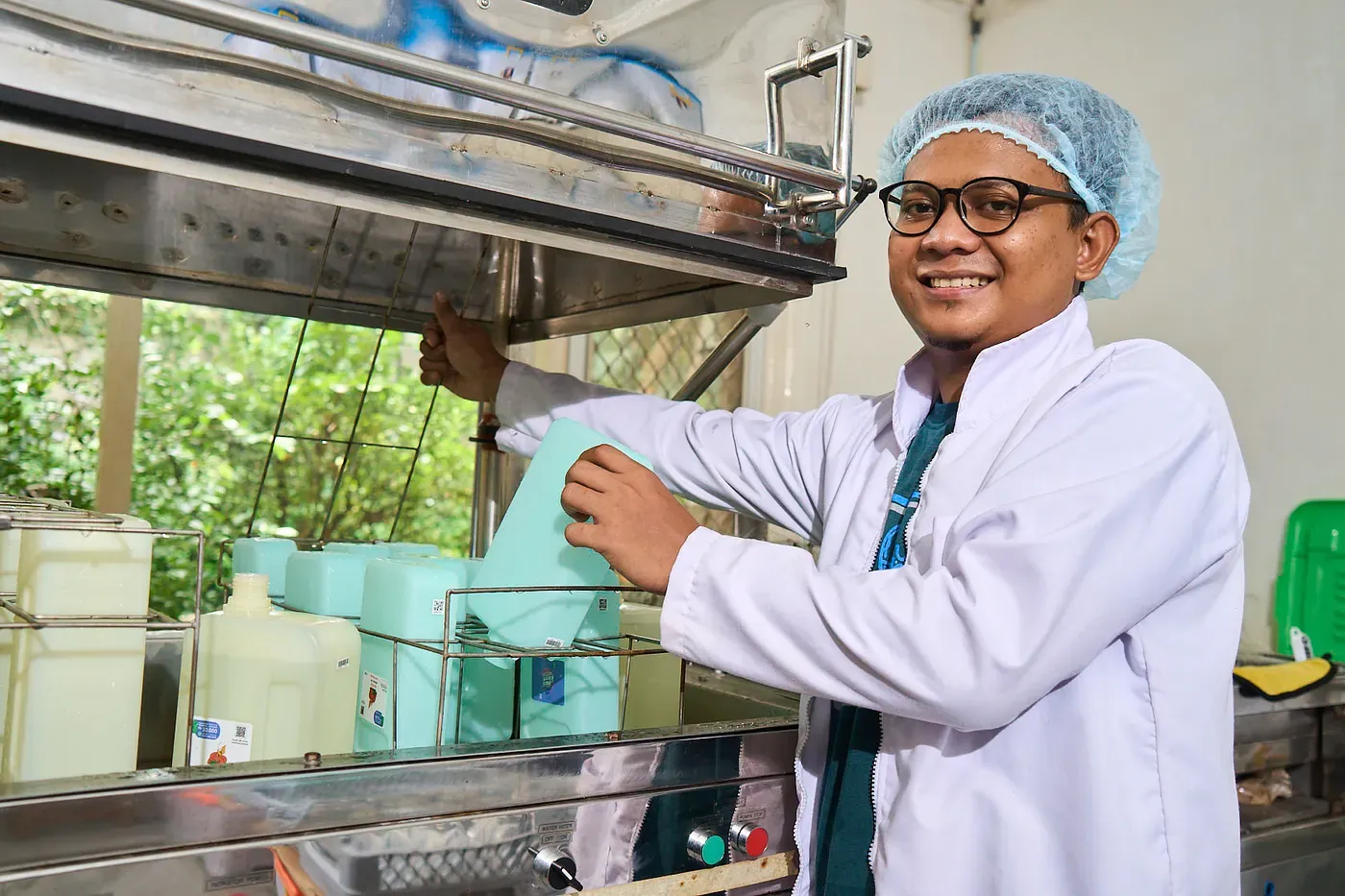
By designing climate-smart and sustainability-focused digital tools and solutions with small businesses in mind, we can support those “little bits of good” that can lead to collective change on a large scale. Take, for example, Rozak Ardian, who owns the Melati Waste Bank in Jakarta, Indonesia. In addition to collecting household waste, Ardian began selling household goods, such as food and detergent, in reusable and returnable packaging through Alner, a startup and Mastercard Strive partner. Ardian’s customers are now participants in a more circular economy, and he can generate some extra income.
Alner is one of Mastercard Strive’s Innovation Fund winners, supporting small businesses in reducing their environmental impact and improving resilience to climate-related risks. Below, we share other examples of the ways we are contributing to this progress by supporting our partners through data and upskilling, innovative digital solutions, and increased access to finance.
Data and upskilling to empower small businesses’ sustainable choices and practices
In Europe, a Mastercard Strive EU program partner, Ragna, is a conversational, AI-powered assistant designed to help small businesses manage their sustainability efforts. Ragna offers small businesses tailored support in identifying relevant sustainable practices and improvements, accessing green funding, and understanding relevant sustainability regulations. For instance, Ragna can help a small business owner ensure their compliance with EU sustainability requirements.
Similarly, Vested Impact is also offering valuable sustainability-related data to small businesses to support their efforts. Sustainability data solutions can often be inaccessible and expensive for small businesses, and do not cater to their unique needs. However, Vested Impact supports small businesses in understanding the social and environmental effects of their operations using accessible data tools. Small businesses gain access to a comprehensive summary of data they need to become more sustainable and impactful.
Digital solutions that encourage a circular and sustainable economy
Across the globe, Mastercard Strive partners are also developing and testing digital solutions for small businesses to adopt more circular practices such as refillable packaging and product reuse. In addition to Alner’s reusable solution to reduce plastic packaging in Indonesia, Novek has tested tech-enabled vending machines that can supply household staples in varying quantities (in this case, it was washing powder) in Kenya to reduce single-use plastic packaging for small retailers.
Mastercard Strive is also supporting solutions that facilitate returns and repair processes from small retailers. Tern Eco’s white-label software enables small businesses in the UK to develop their own circular retail programs, by offering their customers more sustainable trade-in options, such as repairs, upcycling, automated reselling, and recycling. It Goes Forward is also redesigning the e-commerce return process for small businesses in the EU to reduce their environmental impacts and costs. The solution enables small online retailers to resell and send a returned item directly from the product-returning consumer to the next, thereby skipping the journey back to the warehouse and reducing costs and CO₂ emissions.
Enabling greater access to capital to support business transformations
Partners are also supporting small businesses and financial institutions with access to capital, which supports low-carbon, climate-resilient operations by small businesses:
- In the EU, tilt equips small businesses with an automated data analytics solution that provides banks and other financial institutions with the information needed to unlock access to targeted green financing for small business transformation.
- In the US, Mastercard Strive USA is working with partners like CNote, an investment platform, that connects impact capital with mission-driven depository institutions (MDDIs). For example, CNote matched impact investor Xylem, which utilizes smart technology to develop innovative water, wastewater, and energy solutions, with MDDIs in rural areas, such as McGehee Bank in Arkansas. This partnership helped Xylem originate more than $130 million in loans to small businesses linked to clean water projects.
When small businesses are equipped with the right tools, data, financing, and support, they can make practical changes that can collectively benefit their communities and the environment over time. In the transition towards a more sustainable future, accessible and relevant solutions can support small businesses towards ‘those little bits of good.’