Collaborating to unlock sustainable growth: How tilt is connecting small businesses and financial institutions in Europe
Mastercard Strive ―
Discover how tilt uses sustainability data and green financing insights to help European small businesses measure emissions, access funding, and accelerate their path to net zero.

This post is by tilt, a Mastercard Strive EU Innovation Fund winner. tilt is an automated data analytics solution that provides banks and other financial institutions with the information needed to unlock access to targeted financing for small business transformation toward a low-carbon future.
At tilt, we believe that empowering small businesses and financial institutions with sustainability data solutions, in line with their specific needs, is critical to achieving Europe’s net-zero ambitions. tilt helps small businesses and their financing partners adopt sustainable practices by measuring emissions, assessing climate risks and emission reduction potentials, and turning these insights into financing strategies.
Small and medium businesses make up over 60% of company emissions within the EU, but a majority lack the know-how and funding for climate action. Banks can change this through green lending opportunities, but currently, there is a lack of sustainability data solutions for small businesses in the market. At the same time, we recognize that changing entrenched financing and reporting practices is complex, and progress will take time.
Our data solution aims to address these challenges by providing needed insights for small businesses and financial institutions, such as:
- Estimations on a company’s absolute emissions, including a split into different emissions categories (e.g., Scope 1, 2, and 3), provide insights into a company’s environmental impact.
- An indicator of emission reduction potential determining how many emissions a small business can reduce through suitable and effective climate actions.
- Insights on cost reductions through recommended climate actions, to make it tangible for small businesses to understand how climate action now can reduce future risks and costs.
- Actionable insights for financial institutions to design financing products to fund impactful climate actions taken by small businesses.
By bridging the environmental sustainability data gap, tilt empowers small businesses and financial institutions to collaborate on their sustainability transition.
Key findings from our market research
We’ve spent the past few months engaging deeply with small businesses and financial institutions to understand their challenges and aspirations around sustainability. The insights we’ve gathered have been invaluable in shaping tilt’s science-driven solutions for climate action. This post highlights what we’ve learned so far and how we’re translating these insights into action.
We began with an in-depth market study, including:
- 50+ interviews with small businesses across the most climate-relevant sectors in Germany (e.g., agriculture and land use, iron and steel, chemicals, cement, and other manufacturing segments).
- Nearly 100 conversations with financial institutions (including banks, insurers, and others).
- Pilot tests with banks and small businesses to validate our hypotheses.
Here’s what we discovered.
For small businesses
- 54% have implemented climate actions. More than half of the small businesses we interviewed have implemented actions to reduce their climate footprint, such as using renewable energy sources, electric vehicles, or recyclable materials. Interestingly, three small businesses weren’t aware that their practices were already contributing to emission reductions.
- Intrinsic motivation to adopt sustainable practices is high. Interviews revealed that 62% of small businesses are driven by intrinsic motivation to act on sustainability, followed by customer demand (20%), and cost efficiency (18%).
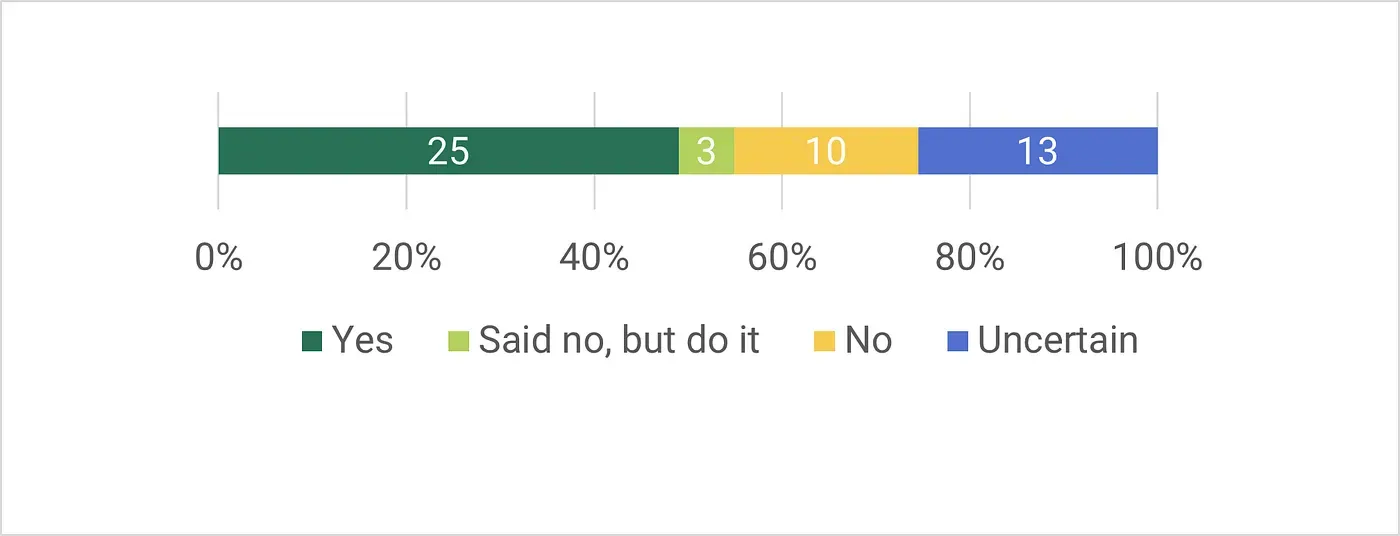
Figure 1: Small business responses to the question of whether they implement climate actions
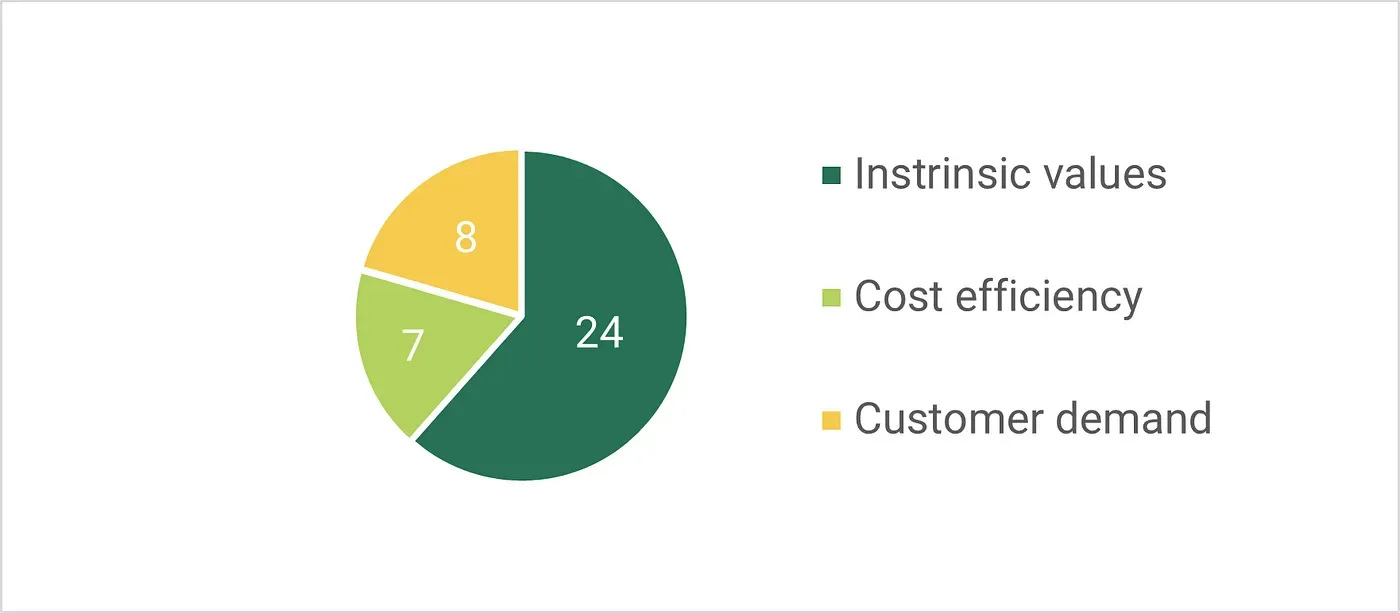
Figure 2: Small business responses to the question of what their main drivers are to implement climate actions
- However, small businesses also report challenges to implementing sustainability practices:
- Knowledge gaps: 58% of small businesses report a lack of expertise to take climate action.
- Financial constraints: High upfront costs deter investment in energy-efficient technologies.
- Time and resource limits: Day-to-day operational pressures leave little room for long-term planning.
- Complexity and mistrust: Administrative burdens and a lack of clear guidance reduce engagement with sustainability initiatives.
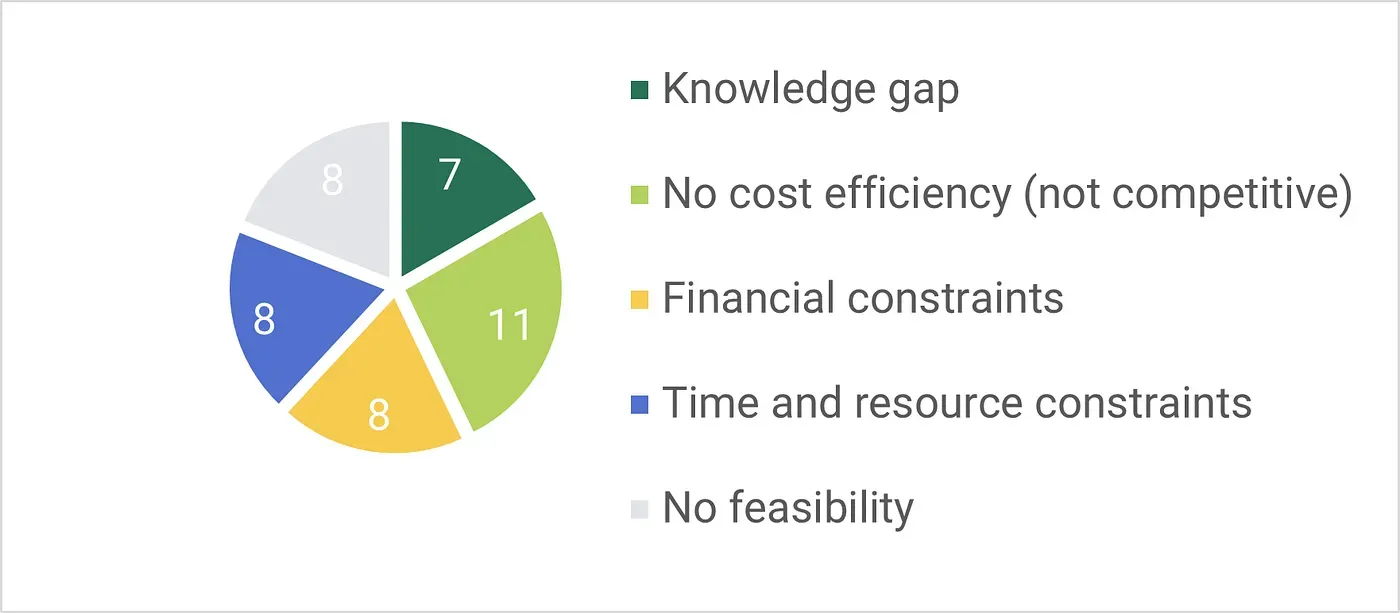
Figure 3: Small business responses to the question of what their main challenges are in implementing climate actions
These findings underscore that even with strong motivation, small businesses often feel overwhelmed by the complexity of sustainability requirements and align with insights from other sources, such as the SME Climate Hub, which highlighted the lack of know-how (58%) and funding (55%) for SMEs to take effective climate action. This consistency across studies highlights not just the urgency of the problem, but also how persistent barriers remain despite growing awareness.
“Many of our [small business] clients don’t see what’s in it for them. They need clear, quantifiable benefits to act. This points to a fundamental challenge: data alone isn’t enough — it has to be translated into tangible business value for SMEs.” — Loan Officer, from our pilot test
For financial institutions
- Regulatory compliance drives action. Compliance with environmental, social, and governance (ESG) disclosure and climate risk management requirements (from the European Central Bank, European Banking Authority, and national regulators) are pressing priorities.
- Challenges persist:
- ESG data gaps: Most small businesses are unable to provide the data financial institutions need for compliance, but also to assess the sustainability profile of their small business clients and offer suitable green financing products (e.g., in Germany, only 10% of SMEs provide the ESG data banks require).
- Lack of tailored tools: There is a lack of tools to collect and analyze small business ESG data in the market. Existing ESG data solutions either focus on large companies or require small businesses to fill in extensive and time-consuming questionnaires for data collection. This reality limits financial institutions with assessing and supporting their small business clients.
- Resource constraints: Collecting and analyzing ESG data across thousands of small business clients is costly and time-consuming for financial institutions.
In practice, this means that even well-intentioned financial institutions struggle to turn regulatory requirements into practical, scalable support for their small business clients.
What we learned from our pilot tests
In addition to our interviews and conversations with almost 100 financial institutions, we also ran pilots with two financial institutions and a small subset of clients from their portfolios (between 10 and 20). As part of each pilot, the financial institutions shared a selection of their small business clients with us. We then provided climate data insights for each via our data solution. In dedicated workshops with the financial institutions, we discussed our solution’s output, how it meets their needs, the challenges they see in the market, and how a solution like tilt can help to solve these. This hands-on experience yielded practical insights into what works and what doesn’t for sustainability solutions in small businesses and financial institutions. These pilots also demonstrated that no single tool can address every data gap — adoption depends as much on building trust and integrating into existing workflows as on technical accuracy.
Small business insights
- Small business owners want to showcase their sustainability efforts to clients and stakeholders, but because they face financial and resource constraints, they need simple, credible tools that are easy to implement.
- Traditional ESG tools are too complex and time-consuming for small teams.
- tilt’s user-friendly interface and science-backed data allowed small businesses to quickly measure and communicate their climate impact.
- At the same time, our pilots showed us that such tools only work if they integrate smoothly into existing processes. Otherwise even user-friendly solutions risk low adoption
“With tilt, we can finally prove what we’ve always stood for — real, circular sustainability, made measurable through smart, science-based insights.” — Small Business Owner of a Textile Store
Financial institution insights
- More financial institutions see small business climate resilience as critical for managing future credit risk and unlocking green lending opportunities.
- tilt’s pilots demonstrated the value of automated, scalable climate risk assessments that require minimal client input.
- By combining climate insights with financial data, financial institutions can offer tailored sustainability-linked financing products, which are essential to support small businesses in their transition.
“What we found exciting from our pilot test: tilt’s climate profiles and automated measures could help us support SMEs in transforming their businesses and securing the right kind of financing.” — Sustainability Specialist, Sparkasse Hannover
How tilt is evolving our solution
Based on these findings, tilt is continuously enhancing our tools and methodologies to better serve small businesses and financial institutions:
- Simplicity and efficiency: No data collection is needed by the financial institution itself, as tilt is based on a method that only requires three data inputs per small business, which are collected from other sources to generate climate profiles. In combination with an intuitive design, this makes tilt’s sustainability assessments and climate action recommendations quick and painless. Our updated user interface makes it easier for users to understand data insights at a glance.
- Automation and scalability: Generative AI–powered matching of company to climate data for portfolio analysis enables financial institutions to assess climate risks across thousands of clients. Based on user feedback and AI advancements, we significantly increased the quality and coverage of our data solution.
- Actionable guidance: Step-by-step recommendations and cost-benefit insights empower small businesses to pursue climate action with confidence, and enable financial institutions to support them in this process through green financing.
- Trust and science-driven approach: tilt’s method is guided by global ESG standards and publishes its methodology openly. We aim for peer review to ensure credibility, clarity, and trust. We also know that our approach is still evolving and will require continuous feedback from both banks and small businesses to truly meet their needs.
Looking ahead
At tilt, we envision a future where every small business in Europe has the know-how and financial support to achieve its net-zero ambitions. The insights from our extensive market research and user testing have shown us that practical ESG data solutions for small businesses, which meet reporting needs and offer pathways for effective climate actions, are urgently needed. The challenge, however, is that building such solutions requires balancing scientific rigor with usability and affordability — a tension that is not easily resolved
We are continuously working towards filling this gap by building a practical, scalable solution. As part of this journey, we are launching the newest version of our product, tilt baseline, for early adopters later this year. tilt baseline offers significantly improved data quality and coverage, as well as a user-friendly interface that helps users to understand their total emissions and reduction potential at one glance.
We believe in the power of collaboration and are convinced that together, we can transform climate challenges into drivers of resilience and success. If you want to learn more about tilt and how you can be part of our work, please reach out: tiltsmes.org