Opening doors and connecting dots: How the small business ecosystem in Missouri is meeting entrepreneurs where they are
Mastercard Strive ―
This article highlights key themes and moments from the third Mastercard Strive USA Summit held in St. Louis, Missouri.
This article highlights key themes and moments from the third Mastercard Strive USA Summit held in St. Louis, Missouri, on June 24, 2024. These summits bring together leaders from government, philanthropy, the private sector, and other groups with the goal of spotlighting and scaling local and national initiatives that strengthen small business ecosystems.
Connecting small businesses with the support they need to operate more efficiently, grow their footprint, and plan for the future requires a bespoke approach — there is no one-size-fits-all solution. Entrepreneurs have different needs at different times, and both markets and technology continue to evolve rapidly. This creates an increasingly complex business environment but also represents more opportunities than ever.
The major theme of the third Mastercard Strive USA Summit was leveraging historic opportunities for small businesses — including unprecedented federal funding, new digital tools, and more equitable financing options — in a diverse small business landscape. Held in St. Louis, the summit brought together national and local leaders from government, philanthropy, the private sector, and other key players.
One key starting point is forming partnerships that combine different resources, skill sets, and networks.
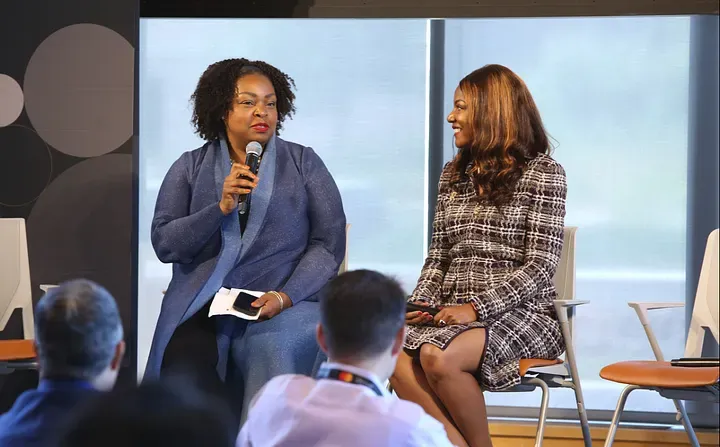
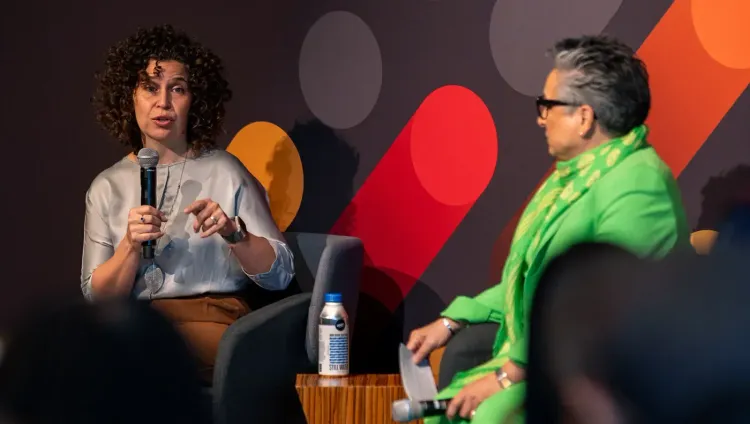
“What we have seen work in St. Louis is when partners come in with technical expertise and tools to help a small business grow, and then partnering with local agencies and organizations already working with small businesses,” said St. Louis Mayor Tishaura Jones in a fireside chat. “You need to marry all of those things together — expertise, resources, and direct connections with small businesses.”
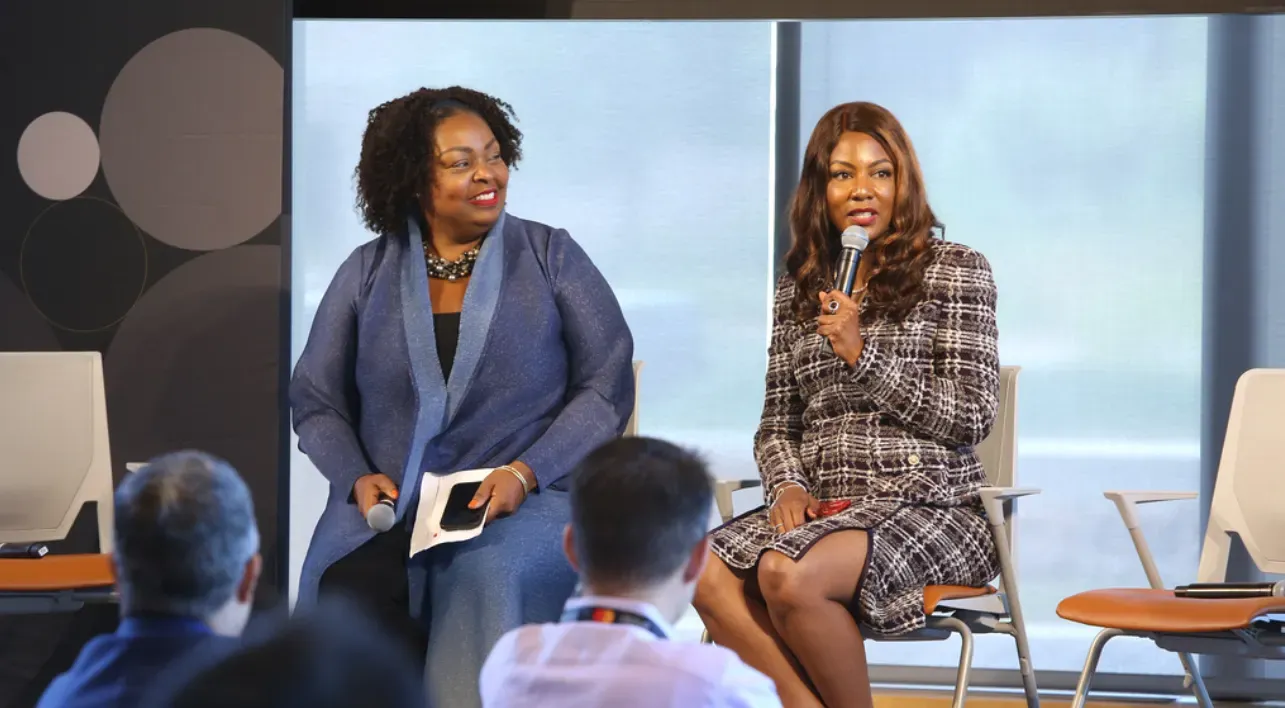
From left to right: Salah Goss, Senior Vice President for Social Impact at the Mastercard Center for Inclusive Growth, and Mayor Tishaura O. Jones, the Mayor of St. Louis, Missouri.
Panel discussions on technology innovations, historic federal programs, and the challenges of supporting entrepreneurs in rural communities illustrated this theme and highlighted various ways to strengthen small business ecosystems.
Ensuring federal funds flow to small businesses
Historic federal funding for small businesses, such as the U.S. Department of Treasury’s $10 billion State Small Business Credit Initiative (SSBCI), was one cross-cutting topic at the Missouri Summit. Across panels, speakers discussed the unprecedented federal funding available while cautioning that effective and equitable disbursement requires support from non-government partners on the ground.
The first challenge is ensuring entrepreneurs are aware of these programs and helping them apply for those relevant to them. For instance, St. Louis Development Corporation (SLDC), the independent economic development agency for the City of St. Louis, established the Northside Economic Empowerment Center (NEEC). The NEEC, supported by the American Rescue Plan Act (ARPA) and Mastercard’s Digital Doors program, offers entrepreneurs and small businesses in-person information and support on a range of local, regional, and federal programs.
Small business owners often need to adjust their mindset before even applying for federal funds. “What I usually tell small businesses that may be eligible for a federal program is to think of that funding as an investment in their business and not a grant,” said Neal Richardson, Chairman, President & CEO of the St. Louis Development Corporation.
“When you are looking for financing, you wouldn’t walk into a bank without a strong business plan and pitch on how you plan to leverage those resources beyond the initial investment. So small business owners need to think of government programs as investment partners, not just grantors.”
At the community level, Nadia Villagrán, Director of Rural LISC and Vice President at LISC, emphasized the importance of developing a plan with input from multiple stakeholders on how federal dollars will be spent and leveraged.
“If a community comes together and talks about what they need, where dollars should go, and then documents it, that will make any application for federal funds much more effective and easier to put into practice,” she said. “This is a historic moment with the amount of money available. We can either thrive when the wave comes or get washed away because we didn’t get our ducks in a row.”
Helping small businesses choose and implement the right technology
The theme of helping small businesses implement new digital tools was another major focus of the convening. Many entrepreneurs start out feeling overwhelmed by the necessity of building a digital presence and the myriad technology choices available.
Hannah Gooding, Director of Partnerships at Nest, a nonprofit supporting marginalized artisans and makers in the U.S. and around the world, explained that this challenge is particularly acute for artisan entrepreneurs.
“Digital technology can be hugely impactful in rural economies where many makers work because it helps them tell their story and sell to communities outside of their immediate vicinity,” said Gooding. “But we have seen our entrepreneurs feel overwhelmed by the omnichannel environment, thinking they need to sell their products in brick-and-mortar stores, on their own website, Etsy, and on Instagram — which all require very different tools, capabilities, and approaches.”
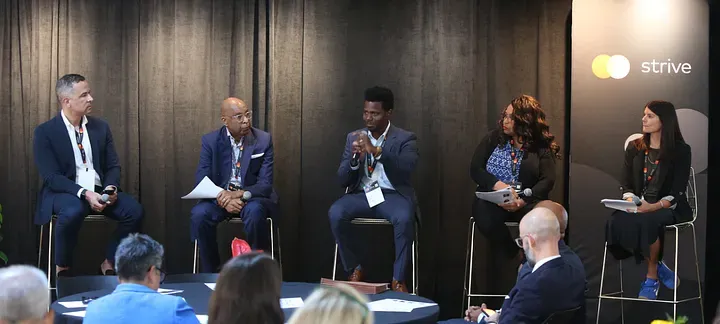
On the technology provider side, discussions centered on how new digital tools can simplify the support process for small businesses. Kamran Qamar, Partner, and Chief Technology Officer at Next Street, spoke about their new one-stop-shop that makes it easy for small businesses to connect with responsible capital providers and business advisors. Bernard Worthy, CEO of LoanWell, an automated lending platform for community lenders, spoke about how new technologies could help upend traditional power dynamics.
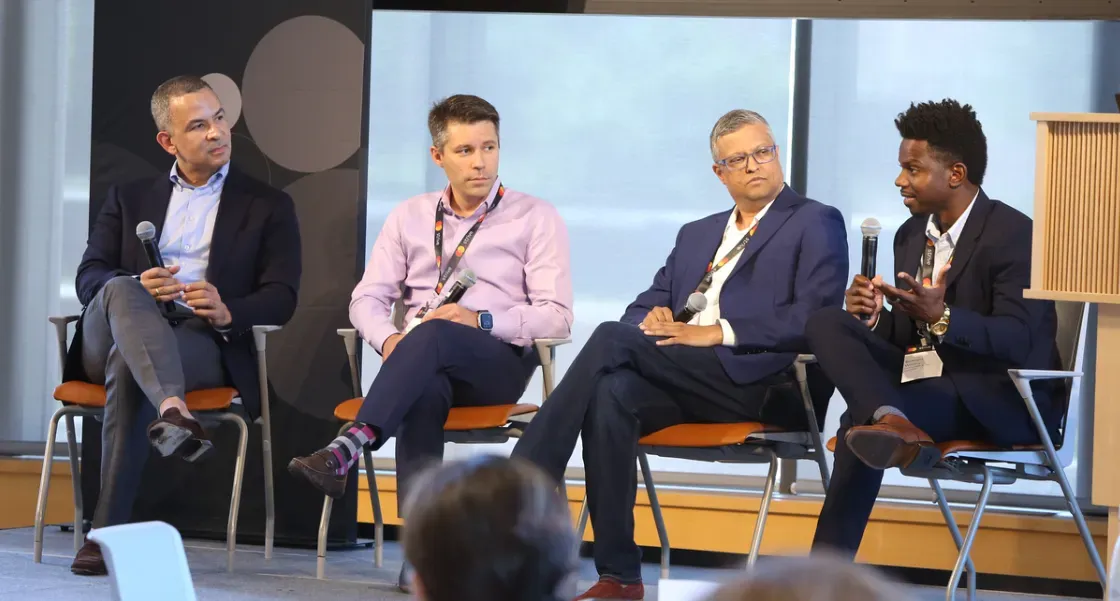
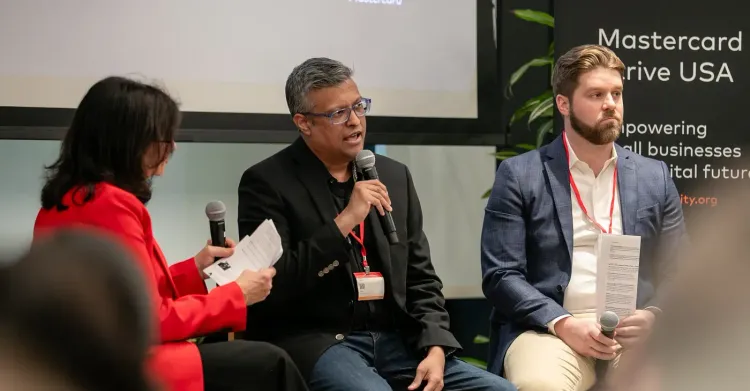
From left to right: Sandy Fernandez, Jordane Baroch, Kamran Qamar and Bernard Worthy
“We are using data and technology so lenders can have more equitable lending practices, such as not relying exclusively on a FICO score and using alternative metrics that are much more relevant,”said Worthy. “There is also something fundamentally flawed about the way we apply for a loan now, which is applying when you really need the money most. He added, “What if there were platforms that were proactive about when you were in the best position to access credit and then educating you about the different types of credit products that may be available? That is already starting to happen.”
Proactive support with humility
The panelists represented a diverse range of organizations, but shared a common view: The starting and ending point for any intervention should be rooted around the needs of the small business owner.
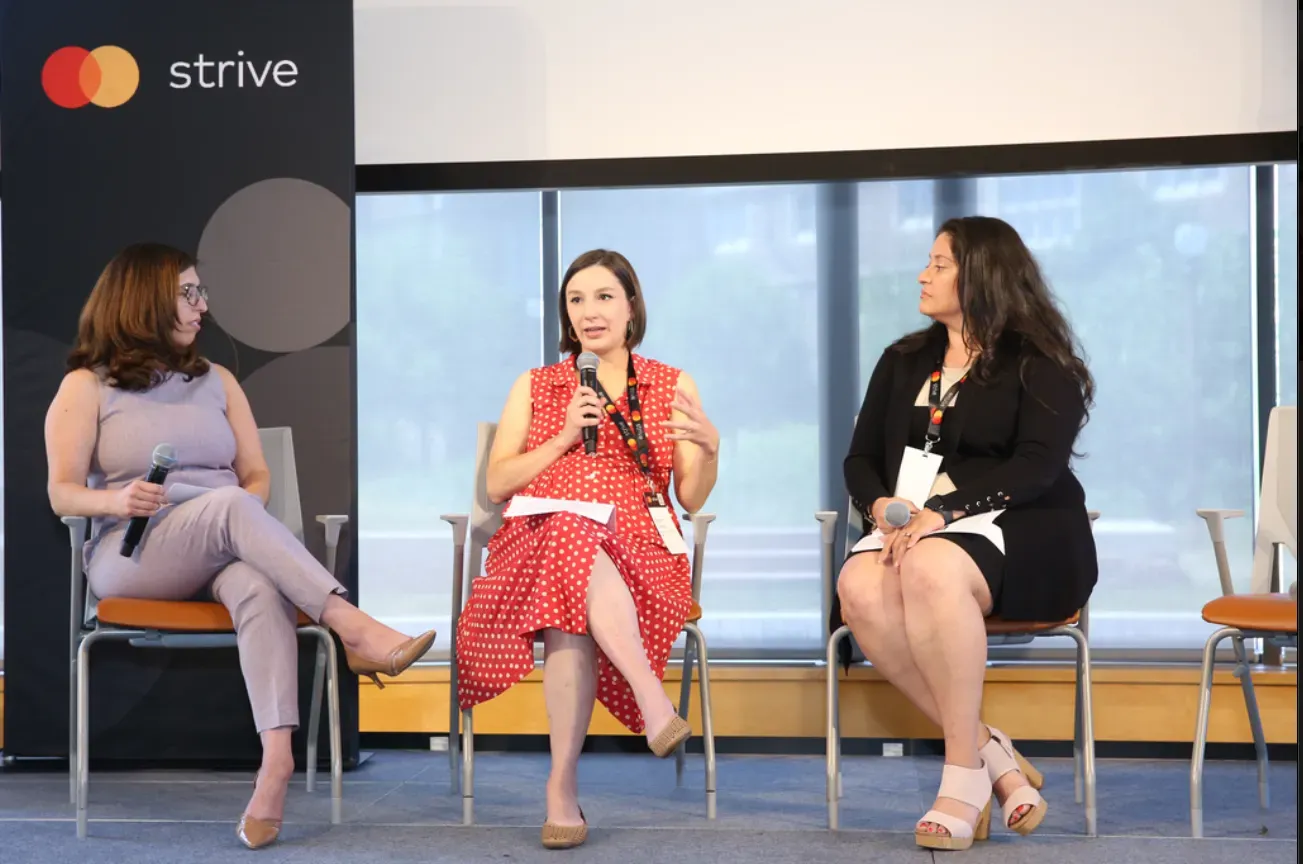
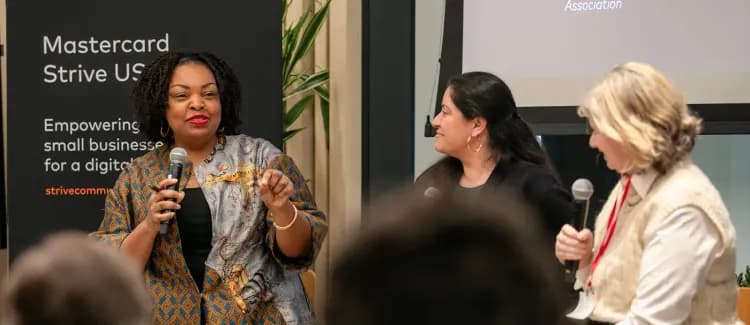
From left to right: Victoria Brown, Senior Director of Programs and Implementation for Mastercard Strive USA at DAI; Hannah Gooding, Director of Partnerships at Nest, and; Nadia Villagrán, Rural LISC Director & Vice President at LISC.
“We need to have an attitude of humility and curiosity when it comes to small business growth. We are not here to say what that growth should look like and how we’ll make it happen,” said Gooding in the closing panel. “We should be asking what they want their growth to look like and how we can help them get there. Entrepreneurs are the ones doing the work — in our case, literally taking scraps of fabric and hand stitching them into quilts, or taking wheat grass and weaving it into baskets. We are just the door openers and dot connectors — and we have to do more for these entrepreneurs, and do it together.”
Related articles

Supporting innovations shaping the next chapter in community finance
For small businesses, access to capital often determines what’s possible and what’s not — from expanding a storefront, to upgrading online ordering systems, or making payroll through a slow season.

The network effect: Inside the CDFI networks and associations powering U.S. small business growth
CDFI networks, such as an industry associations or coalitions, function as conveners that capture and reflect the collective voice of members and help their members in many different ways.
Digging deeper roots in a time of change: Looking back on our work supporting small businesses
The key question that emerged from our work in 2025 was: How do we help small business support organizations not only weather these shifts, but turn them into opportunity?

Entrepreneurship and philanthropy in times of change: How more flexible capital can help fix the small business financing gap
Philanthropic funding has always played an important role in the small business sector. As the rate of change accelerates, philanthropic funders are well-positioned to help small businesses adapt.
Bridging opportunities, coordinating action: How Alabama is investing in its small business…
How Alabama leaders are coordinating partnerships, data, and technology to strengthen the small business ecosystem and expand access to resources statewide.

Collaboration as infrastructure: Lessons on strengthening partnerships in the U.S. small business support system
CDFIs share the same mission but their approaches often differ. Increasingly, however, they are finding ways to collaborate. How can we make these collaborations more sustainable and inclusive?
Scaling impact by standardizing data: A conversation on how better analytics and collaboration can unlock more investment for community lending
Having more consistent definitions and standards about community lending data is one of the six shifts identified in our survey of small business support leaders.
High tech, high touch: How community lenders use digital tools to stay personal with small businesses
By Araba Sapara-Grant Maria worked in the flower district in Manhattan for many years, but her dream of opening her own mobile flower shop seemed untenable.
Built for all, built to last: Six shifts that could change the U.S. small business landscape for generations of entrepreneurs
Six key shifts—from flexible capital to stronger partnerships—could transform the U.S. small business ecosystem and improve long-term entrepreneur success.

Funding creativity, fueling small business growth: Bridging the capital gap in the creative economy
The creative economy is one of the worlds fastest growing sectors, representing $2 trillion in economic activity globally and potentially comprising 10% of GDP by 2030.

Improving small business outcomes through mental health: A profile on Our Village United’s holistic model
How Our Village United’s ELEVATE program combines wellness, funding, and mentorship to help underserved entrepreneurs grow resilient, scalable small businesses.

Embracing an abundance mindset in Kansas: How new collaborations are creating a stronger small business ecosystem
The fifth Mastercard Strive USA Summit recently took place in Lawrence, Kansas in partnership with the Kansas Department of Commerce.
From theory to practice to scale: Mastercard Strive USA’s impact on small businesses in year 2
Mastercard Strive USA significantly grew its portfolio, impact, and voice in Year 2 and set the stage for strengthening small business ecosystems further in Year 3.

Challenging assumptions: How a distinct operations model sets CDFIs apart in a vast financial ecosystem
Discover how Community Development Financial Institutions (CDFIs) provide mission-driven financing, expand access to capital, and help underserved entrepreneurs grow sustainable businesses in the U.S.

Why helping small businesses succeed should be a philanthropic priority
To create an equitable economy, grantmakers should address the financial and training hurdles that cause so many entrepreneurs to fail.

Getting impact capital off the sidelines: how CNote aligns investor interests with community financial institutions — and vice versa
A two-year Mastercard Strive USA grant has paved the way for investment platform CNote to strengthen their organizational capacity.
The unique partnership at the center of California’s new loan match program
A unique and first-time partnership between two mission-driven organizations, Next Street and Community Reinvestment Fund USA.
How local government can help more small businesses succeed: A fireside chat between St. Louis Mayor Tishaura O. Jones and Salah Goss of Mastercard
This conversation on the role of local government in helping small businesses succeed took place at the Mastercard Strive USA Summit in St. Louis, Missouri, between Tishaura O.
Inclusive growth for entrepreneurs in North Carolina — and beyond
This article highlights key themes and moments from the fourth Mastercard Strive USA Summit held in Raleigh, North Carolina.
Behind the headlines: The critical role of credit unions in deploying $27 billion in federal…
Inclusiv will serve as a critical backdrop as it moves forward with its recent $1.87 billion Greenhouse Gas Reduction Fund Clean Communities Investment Accelerator grant.
Meeting small businesses where they are: Technical assistance models that work in an increasingly complex landscape
The technical support entrepreneurs need to launch and grow their businesses can vary widely.
How trust scales impact: The role of local partners in federal programs for small businesses
This article highlights key themes and moments from the second Strive USA Summit in Washington, DC, on April 17, 2024.
Public-private partnerships and small businesses: A conversation on what is working in New York City
This conversation took place at the Mastercard Strive USA Summit in New York City between Kevin D.
Building bridges for small businesses: Highlights from the inaugural Strive USA Summit in New York
Participants at the first Mastercard Strive USA Summit spoke about how to access and leverage the once-in-a-generation investments being made by the federal government.