Getting impact capital off the sidelines: how CNote aligns investor interests with community financial institutions — and vice versa
Mastercard Strive ―
A two-year Mastercard Strive USA grant has paved the way for investment platform CNote to strengthen their organizational capacity.
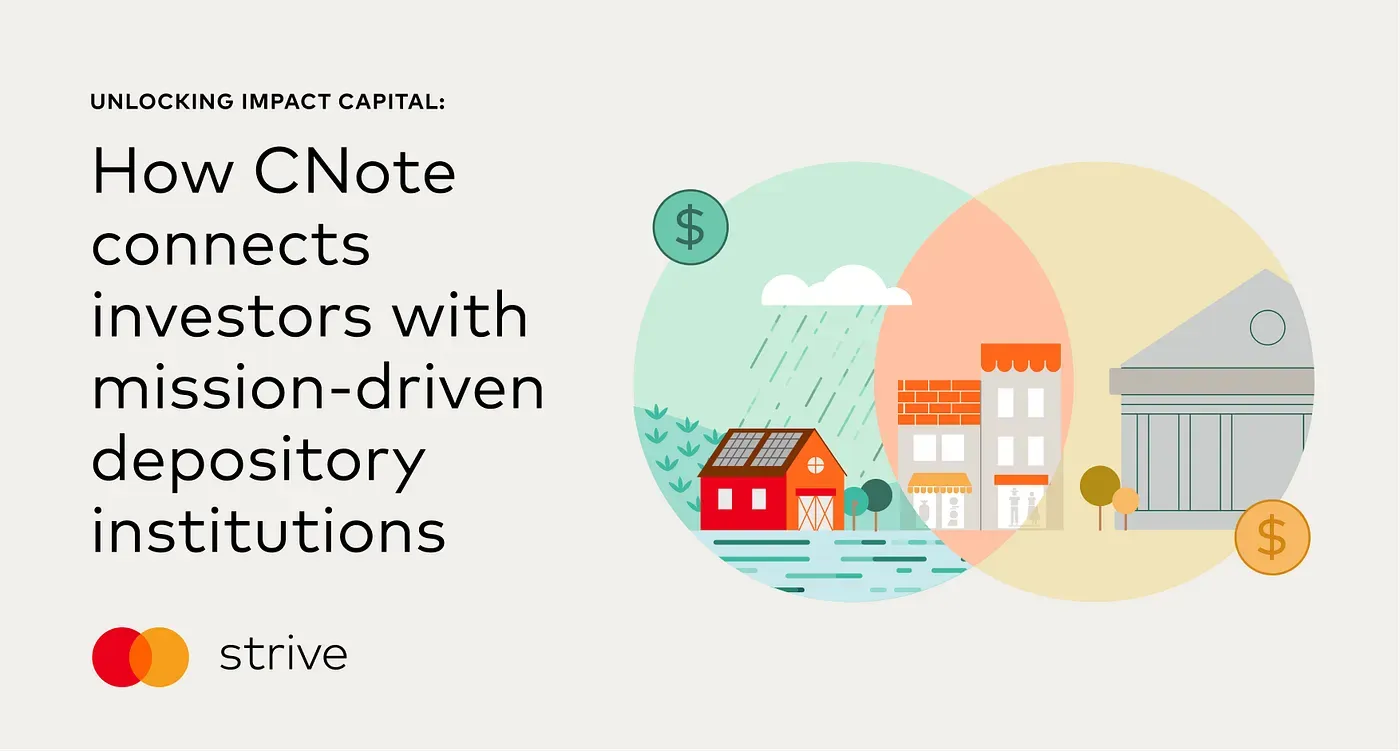
A two-year Mastercard Strive USA grant has paved the way for investment platform CNote to strengthen their organizational capacity, enabling them to scale operations, enhance their technology, and better serve the communities and institutions at the heart of their mission.
Impact investing has grown considerably as a sector in recent years, with an estimated $8.4 trillion in capital ready to deploy globally. CNote recognized how much good could come from connecting investors motivated by social impact to the financial institutions in the United States that play a vital role in underserved communities supporting small businesses but are too often overlooked. Unlocking this new capital stream for these entrepreneurs would require critical community finance infrastructure that did not exist at scale when CNote was founded in 2016.
Impact investors want their money to drive impact but they often aren’t sure where or how to invest it — or even the type of financial institution where their capital should be deposited. Smaller community banks and credit unions operating in lower-wealth communities have often lacked the resources and know-how to do the type of reporting impact investors need to make decisions, which contributed to a lower deposit base and thereby limited their lending.
By tackling the complex dual challenges of helping mission-driven banks and credit unions tell their impact story so they can grow their deposit base, and steering investor capital to financial institutions that drive impact, CNote has cultivated a perspective that supports both sides of this investment equation.
CNote’s deep understanding of the needs and challenges on each side stems from a long — and ongoing — listening and research phase that helped them become both a bridge and translator between these two sectors. On one hand CNote gives investors access to a platform where the impactful work of community banks and credit unions is showcased in a language and format that resonates with their investor mindset; on the other, they build awareness among banks and credit unions about the need for impact data and information for investors — as well as providing them with the systems and tools to tell their stories and get them on impact investors’ radar.
CNote demonstrated early in their start-up journey that their model helped connect impact capital with what they call mission-driven depository institutions (MDDIs). But with increasing demand from both sides for impact capital, their predominant challenge soon became building and scaling up the infrastructure, systems, and partnerships that would help them scale to meet demand while also managing the increased complexity of reporting impact to a broad range of stakeholders.
Leveraging philanthropic support to build systems and impact that scale
A two-year grant from Mastercard Strive USA supported the development of a new, more robust impact reporting system as well as a first-of-its-kind scalable needs-matching system. The results to date speak for themselves: CNote has been able to successfully steer $340 million in social impact investments to community banks and credit unions, and dramatically reduced the time and resources financial institutions need to spend on data input and reporting for impact-focused investors. The capital needs-matching system offers investors transparency and advice when it comes to deploying large amounts of capital, and has significantly improved the speed of capital flow to MDDIs.
An astonishing 96% of MDDIs accessing CNote capital have also indicated that it’s the first impact investor capital they have ever received, illustrating the value the platform brings to the ecosystem — and how under-tapped the impact investment sector has been for MDDIs until now.
”We’ve been able to test our hunch that transparent and custom impact data would play a key role in driving more impact investors to MDDIs — which it most certainly does — and we’re now scaling up accordingly,” says CNote co-founder, Cat Berman.
Beyond building the requisite technology and systems, CNote established the Impact Deposit Collaborative (IDC) during the grant period to help guide their work as well as develop and promote thought leadership and impact measurement within the industry. It unites leaders from the MDDI landscape, including the Community Development Bankers Association, the National Bankers Association, and Inclusiv, with the purpose to co-create solutions that address the unique needs of community finance institutions.
The IDC played an important role in developing CNote’s impact framework for community financial institutions, and over 500 community banks and credit unions across the country are represented by IDC members. CNote’s needs matching database now includes more than 2,500 community financial institutions nationwide.
How CNote’s platform works in practice
Two case studies illustrate how CNote’s model is working today.
Since partnering with CNote, Opportunities Credit Union in Vermont has refined their reporting processes and amplified their positive work to align with investor interests. OCU has a long history of helping local entrepreneurs grow their businesses via access to financial counseling, credit re-building products, and much loan funds to achieve their goals. But their scale has always been small despite an overwhelming need for more accessible financial services.
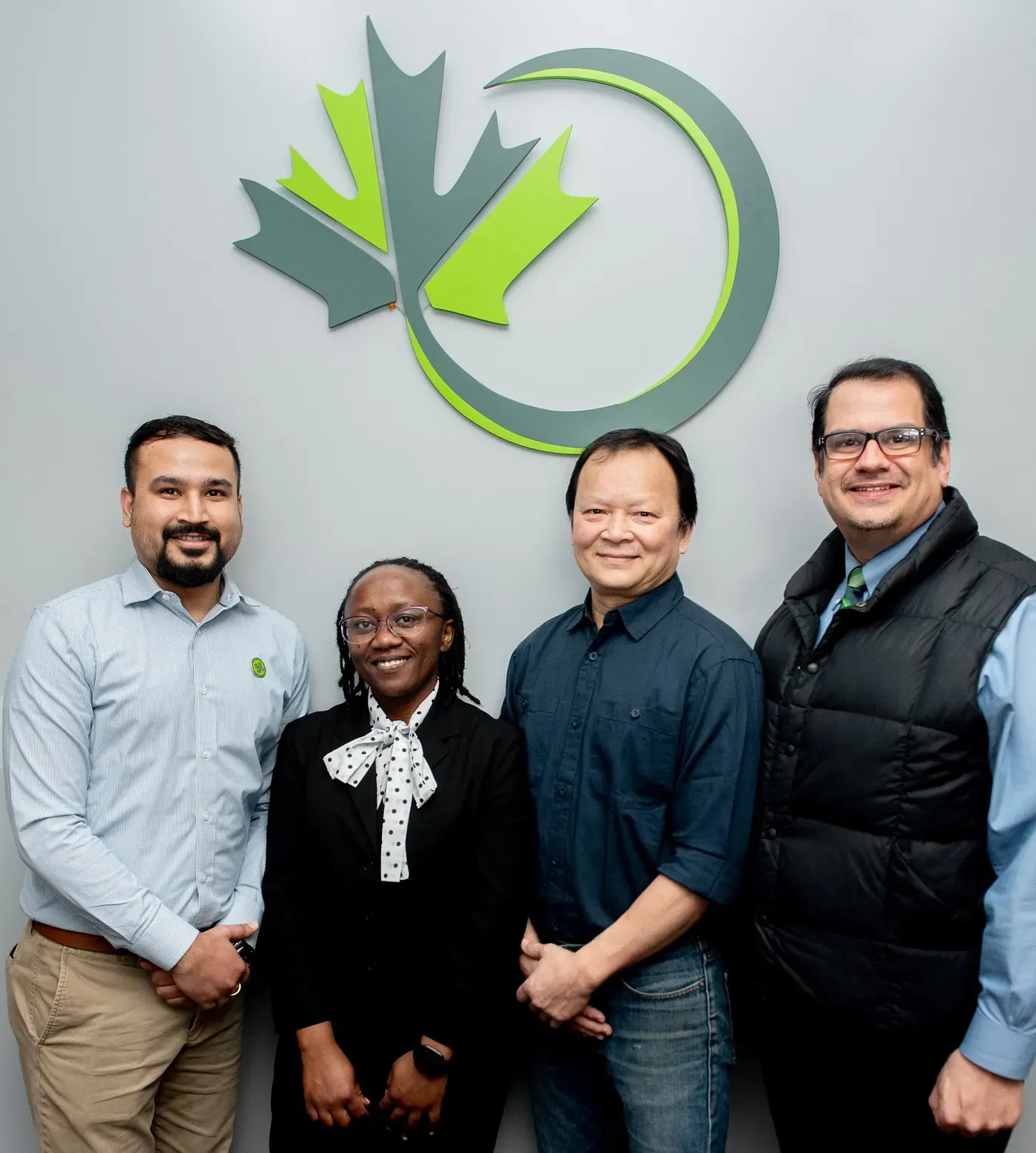
Part of the Opportunities Credit Union leadership team in Vermont. © CNote Group, Inc. 2024. All rights reserved.
CNote has helped them tell their impact story, raise their visibility, and connect them to impact investors who wanted to invest in mission-driven financial institutions but didn’t know how. OCU has been able to access over $4.2 million through CNote’s platform which channels FDIC-and NCUA insured dollars from socially-minded investors to mission-driven partners like themselves. CNote deposits have come in at lower rates and allowed OCU to turn around immediately and start making community loans with those dollars.
Another example shows how CNote’s model can match the diverse goals of impact investors with the diverse landscape of community banks and credit unions. Xylem, an impact investor which uses smart technology to develop innovative water, wastewater, and energy solutions, wanted to direct some of the cash on their balance sheet towards investments that help communities access clean water. Through CNote’s needs-matching system, they targeted their outreach to MDDIs in rural areas, notably McGehee Bank and helping them originate more than $130 million in loans linked to clean water projects. Family-owned Whitaker Farms in Arkansas is one of McGehee Bank’s clients and uses innovative environmental practices to reduce water usage by 40% and enhance water quality, aligning them with Xylem’s impact interests. McGehee Bank has supported Whitaker Farms through land, equipment, and operating loans in a 30-year partnership that has transformed the farm into a leading agricultural entity known for its eco-friendly products.
In this way Xylem has been able to fulfill their impact investment goals to engage, educate, and deepen their commitment to solutions for the environment. Today a portion of their deposits is actively supporting institutions that help farmers around the country access clean water. And, CNote’s quarterly impact reports and customized impact stories on clean water initiatives keep Xylem informed on clean water initiatives their deposits have supported.
What comes next
From here CNote’s ultimate goal is to refine and expand these systems, creating a more resilient and responsive financial ecosystem that bridges the gap between available capital and the needs of diverse small businesses and MDDIs. The hope is that these efforts will significantly improve the flow of capital, fostering long-term economic growth and sustainability in underserved communities.
Reflecting on the grant accomplishments and the recent announcement that CNote has been awarded an additional Mastercard Strive USA grant, Sandy Fernandez, vice president for social impact at the Mastercard Center for Inclusive Growth, reflected: “CNote is an amazing story and emblematic of the impact we are trying to drive through Mastercard Strive USA. They have built infrastructure that is helping to break down silos in the small business sector and unlocked hundreds of millions in capital for financial institutions that serve underserved entrepreneurs. The impact has been massive, but we’re also focused on the huge potential for growth that is still in front of us.”
Related articles

Supporting innovations shaping the next chapter in community finance
For small businesses, access to capital often determines what’s possible and what’s not — from expanding a storefront, to upgrading online ordering systems, or making payroll through a slow season.

The network effect: Inside the CDFI networks and associations powering U.S. small business growth
CDFI networks, such as an industry associations or coalitions, function as conveners that capture and reflect the collective voice of members and help their members in many different ways.
Digging deeper roots in a time of change: Looking back on our work supporting small businesses
The key question that emerged from our work in 2025 was: How do we help small business support organizations not only weather these shifts, but turn them into opportunity?

Entrepreneurship and philanthropy in times of change: How more flexible capital can help fix the small business financing gap
Philanthropic funding has always played an important role in the small business sector. As the rate of change accelerates, philanthropic funders are well-positioned to help small businesses adapt.
Bridging opportunities, coordinating action: How Alabama is investing in its small business…
How Alabama leaders are coordinating partnerships, data, and technology to strengthen the small business ecosystem and expand access to resources statewide.

Collaboration as infrastructure: Lessons on strengthening partnerships in the U.S. small business support system
CDFIs share the same mission but their approaches often differ. Increasingly, however, they are finding ways to collaborate. How can we make these collaborations more sustainable and inclusive?
Scaling impact by standardizing data: A conversation on how better analytics and collaboration can unlock more investment for community lending
Having more consistent definitions and standards about community lending data is one of the six shifts identified in our survey of small business support leaders.
High tech, high touch: How community lenders use digital tools to stay personal with small businesses
By Araba Sapara-Grant Maria worked in the flower district in Manhattan for many years, but her dream of opening her own mobile flower shop seemed untenable.
Built for all, built to last: Six shifts that could change the U.S. small business landscape for generations of entrepreneurs
Six key shifts—from flexible capital to stronger partnerships—could transform the U.S. small business ecosystem and improve long-term entrepreneur success.

Funding creativity, fueling small business growth: Bridging the capital gap in the creative economy
The creative economy is one of the worlds fastest growing sectors, representing $2 trillion in economic activity globally and potentially comprising 10% of GDP by 2030.

Improving small business outcomes through mental health: A profile on Our Village United’s holistic model
How Our Village United’s ELEVATE program combines wellness, funding, and mentorship to help underserved entrepreneurs grow resilient, scalable small businesses.

Embracing an abundance mindset in Kansas: How new collaborations are creating a stronger small business ecosystem
The fifth Mastercard Strive USA Summit recently took place in Lawrence, Kansas in partnership with the Kansas Department of Commerce.
From theory to practice to scale: Mastercard Strive USA’s impact on small businesses in year 2
Mastercard Strive USA significantly grew its portfolio, impact, and voice in Year 2 and set the stage for strengthening small business ecosystems further in Year 3.

Challenging assumptions: How a distinct operations model sets CDFIs apart in a vast financial ecosystem
Discover how Community Development Financial Institutions (CDFIs) provide mission-driven financing, expand access to capital, and help underserved entrepreneurs grow sustainable businesses in the U.S.
Why helping small businesses succeed should be a philanthropic priority
To create an equitable economy, grantmakers should address the financial and training hurdles that cause so many entrepreneurs to fail.
The unique partnership at the center of California’s new loan match program
A unique and first-time partnership between two mission-driven organizations, Next Street and Community Reinvestment Fund USA.
How local government can help more small businesses succeed: A fireside chat between St. Louis Mayor Tishaura O. Jones and Salah Goss of Mastercard
This conversation on the role of local government in helping small businesses succeed took place at the Mastercard Strive USA Summit in St. Louis, Missouri, between Tishaura O.
Inclusive growth for entrepreneurs in North Carolina — and beyond
This article highlights key themes and moments from the fourth Mastercard Strive USA Summit held in Raleigh, North Carolina.
Behind the headlines: The critical role of credit unions in deploying $27 billion in federal…
Inclusiv will serve as a critical backdrop as it moves forward with its recent $1.87 billion Greenhouse Gas Reduction Fund Clean Communities Investment Accelerator grant.
Opening doors and connecting dots: How the small business ecosystem in Missouri is meeting entrepreneurs where they are
This article highlights key themes and moments from the third Mastercard Strive USA Summit held in St. Louis, Missouri.
Meeting small businesses where they are: Technical assistance models that work in an increasingly complex landscape
The technical support entrepreneurs need to launch and grow their businesses can vary widely.
How trust scales impact: The role of local partners in federal programs for small businesses
This article highlights key themes and moments from the second Strive USA Summit in Washington, DC, on April 17, 2024.
Public-private partnerships and small businesses: A conversation on what is working in New York City
This conversation took place at the Mastercard Strive USA Summit in New York City between Kevin D.
Building bridges for small businesses: Highlights from the inaugural Strive USA Summit in New York
Participants at the first Mastercard Strive USA Summit spoke about how to access and leverage the once-in-a-generation investments being made by the federal government.