Supporting innovations shaping the next chapter in community finance
Mastercard Strive ―
For small businesses, access to capital often determines what’s possible and what’s not — from expanding a storefront, to upgrading online ordering systems, or making payroll through a slow season.
For small businesses, access to capital often determines what’s possible and what’s not — from expanding a storefront, to upgrading online ordering systems, or making payroll through a slow season. In many communities, that access remains uneven, shaped by gaps in traditional financial markets. Globally, access to capital remains the number one barrier that hinders small business growth.
Community Development Financial Institutions, or CDFIs, help bridge that gap by providing flexible financing where it is most constrained. Across the country, members of Opportunity Finance Network, a large national network of CDFIs, have provided more than $136 billion in cumulative financing in rural, urban, and Native communities through 2024. This financing has helped to create or maintain nearly 1.2 million businesses and microenterprises and 3.8 million jobs.
That scale reflects decades of adaptation by CDFIs to changing conditions. Today, the challenge is less about proving economic impact and more about sustaining and expanding it. But small business lenders today are navigating tighter capital markets, evolving partner expectations, and growing pressure to modernize systems, data, and ways of working, often at the same time.
OFN’s Innovation Initiative was built with this landscape in mind. With support from Mastercard Strive USA, the work focuses on strengthening the infrastructure that underpins small business finance, from capitalization strategies to systems, partnerships, and capacity that can be shared and sustained across the field.
To explore how this work is unfolding and what it could unlock for small business lenders nationwide, Mastercard Strive USA spoke with Francisco Lopez, Senior Vice President for Innovation Programming, at OFN.
Francisco, the CDFI sector has always innovated and evolved in response to changing conditions. In your view, what is it about the current moment that is both familiar and different?
What’s familiar is that CDFIs have always adapted. They were created to solve market gaps, and that problem-solving mindset has always been part of how they work.
What’s different now is the pace and complexity of change. CDFIs are facing rising small business demand, policy uncertainty, tighter capital markets, and rapid advances in technology all at once. They’re being asked not just to adjust programs, but to rethink operations, data, partnerships, and capitalization strategies at the same time. Many of our member CDFIs today are having to prioritize retaining or pursuing new capital sources, while also facing pressure to maintain portfolio health, improve operations through technology investments, and explore integrations with AI systems. These tradeoffs come during an environment where funding is more uncertain and unreliable, while small business demand continues to grow. This moment calls for practical, scalable solutions that help the industry evolve in a coordinated way.
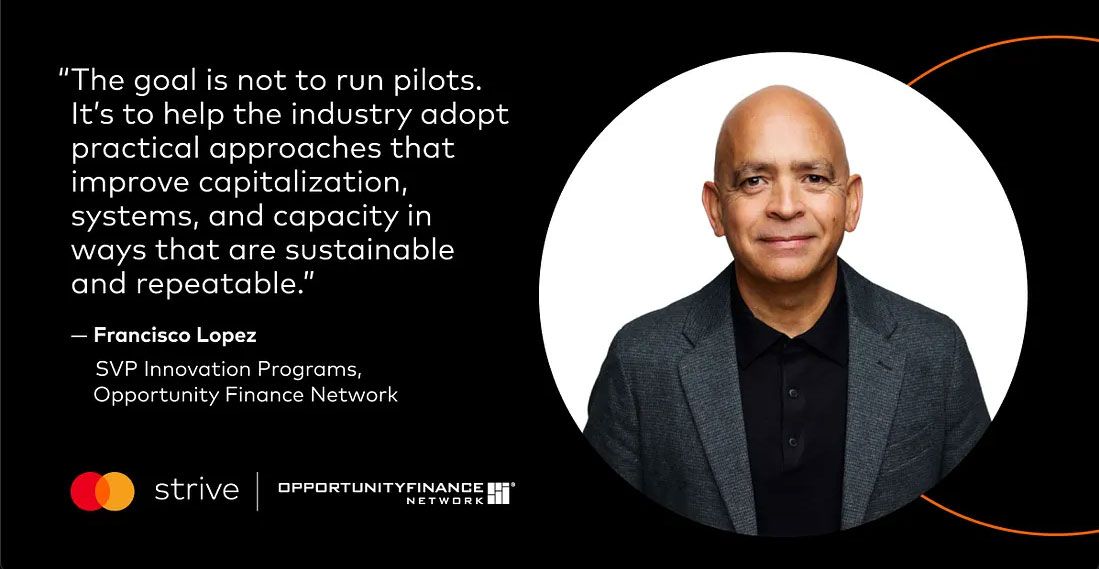
Francisco Lopez, SVP Innovation Programs at Opportunity Finance Network, shares his insights on sustainable industry development.
Why did OFN launch its Innovation Initiative now? And can you briefly describe the work you are leading and the results you hope to achieve?
CDFIs told us they needed structure to scale their innovations. They often work in isolation and without the structure needed to turn their innovation work into scalable solutions for the broader field. The Innovation Initiative is about changing that. Through the Innovation Center, the Innovation Council, and cohorts like the Capital Solutions Accelerator, OFN is working to identify, shape, and advance solutions that can strengthen how CDFIs operate and serve small businesses. The goal is not to run pilots. It’s to help the industry adopt practical approaches that improve capitalization, systems, and capacity in ways that are sustainable and repeatable.
True innovation tends to come from the bottom up, from the entrepreneurs and organizations that are on the front lines every day solving problems. So, what is the role that OFN can play as a network organization to support and help scale these solutions? And do you decide what are “good” ideas?
The ideas originate from CDFIs and other providers, who are closest to entrepreneurs, communities, and the industry.OFN’s role is to work alongside them to turn those ideas into solutions the broader industry can use. Because we sit at the network level, we can identify common challenges, bring the right partners to the table, and help shape approaches that are viable, scalable, and relevant across different types of CDFIs. For example, OFN can connect funders and investors who are committed to the CDFI industry, with scalable solutions being developed by CDFIs and other partners. In our current Accelerator cohort, which is focused on developing scalable capitalization solutions for CDFIs, OFN is looking to help develop, support and potentially drive solutions that can make capitalization sources more accessible and diversified than before. This is exactly the kind of partnership-driven work that makes the field stronger; we’re not building alone, we’re building together.
As you engage CDFIs across the country, what themes or challenges are showing up most often in your work? And which of these do you think you can meaningfully address through the work of the Innovation Initiative?
A few themes come up consistently: difficulty accessing flexible capital, outdated technology and data systems, operational burden, and uncertainty around how to form effective partnerships. These are exactly the kinds of challenges the Innovation Initiative is designed to address. The Capital Solutions Accelerator focuses on practical approaches to capitalization. Some themes we’re seeing include using data systems to produce better story-telling and reporting for funders and investors, solutions that help CDFIs recycle capital more efficiently by preparing borrowers for mainstream banking, and strategies to unlock new potential sources of capital. Our work on data, technology, and market/industry research helps surface concrete pathways for modernization. And partnerships with organizations like Mastercard Strive allow us to bring in expertise that accelerates solution development. We can’t remove every obstacle, but we can advance solutions that make those obstacles easier to navigate.
You’ve launched the Innovation Center and the first small business cohort. What are you learning from CDFIs as they begin to test and shape new ideas? What specific ideas have emerged already that are particularly exciting for you?
One key learning is that CDFIs have strong instincts about what needs to change but rarely have the time and structure to work through those changes in a focused way. We’re seeing promising approaches around new loan capital structures, participation in secondary markets, better use of data in underwriting, AI, innovative ways of better serving entrepreneurs, and new models for funding technical assistance. I am particularly excited about ideas that help CDFIs operate more efficiently, whether through the implementation of new financial technologies, processes, and structures, or through more centralized technology infrastructure, while also enabling CDFIs to better access secondary markets. For example, we’re seeing innovations that enable better data and reporting on portfolio outcomes, helping to de-risk CDFI loan performance in the eyes of capital providers. What’s exciting is that these are not abstract concepts. They are practical approaches that, with refinement, can be adopted by other CDFIs across the country.
When you look ahead to the end of the initial two years, what milestones will tell you the industry is moving in the right direction?
We’ll know if we see CDFIs adopting new capitalization and partnership models, modernizing data and technology systems, and applying solutions that emerged through this work in their day-to-day operations. Another important sign of success will be replication, when other OFN members adopt these approaches because they’ve been proven effective. Success is when these solutions become part of how the industry operates, not a special project.
Looking further ahead, what makes OFN optimistic about the CDFI industry’s capacity to embrace and sustain this latest wave of innovation?
CDFIs are deeply mission driven and practical. They are looking for approaches that work and can be sustained. What’s also encouraging is the growing ecosystem of partners, like Mastercard Strive and the Mastercard Center for Inclusive Growth, technology providers, and capital markets participants, who want to work alongside the industry in developing and implementing these solutions. With the right collaboration and a focus on practical, scalable approaches, OFN and CDFIs are well positioned not just to adapt, but to lead in shaping how small business finance can work better.
Related articles

The network effect: Inside the CDFI networks and associations powering U.S. small business growth
CDFI networks, such as an industry associations or coalitions, function as conveners that capture and reflect the collective voice of members and help their members in many different ways.
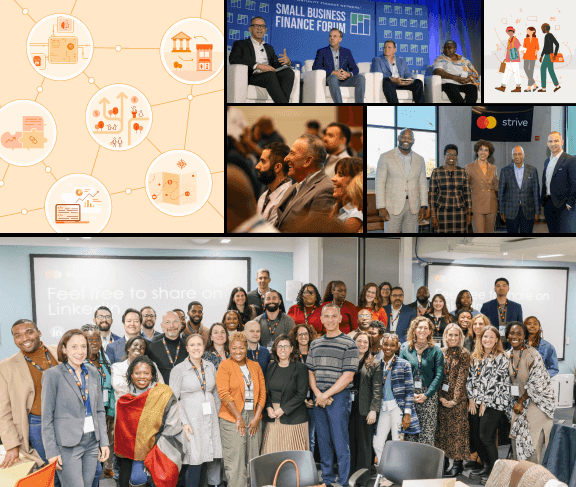
Digging deeper roots in a time of change: Looking back on our work supporting small businesses
The key question that emerged from our work in 2025 was: How do we help small business support organizations not only weather these shifts, but turn them into opportunity?

Entrepreneurship and philanthropy in times of change: How more flexible capital can help fix the small business financing gap
Philanthropic funding has always played an important role in the small business sector. As the rate of change accelerates, philanthropic funders are well-positioned to help small businesses adapt.
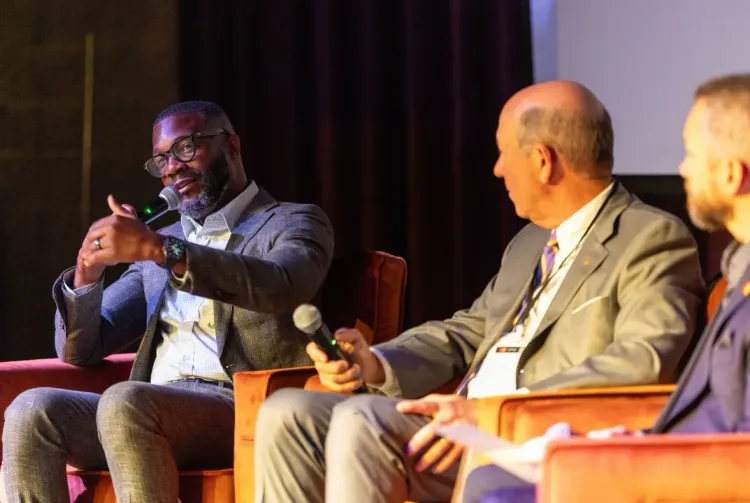
Bridging opportunities, coordinating action: How Alabama is investing in its small business…
How Alabama leaders are coordinating partnerships, data, and technology to strengthen the small business ecosystem and expand access to resources statewide.

Collaboration as infrastructure: Lessons on strengthening partnerships in the U.S. small business support system
CDFIs share the same mission but their approaches often differ. Increasingly, however, they are finding ways to collaborate. How can we make these collaborations more sustainable and inclusive?
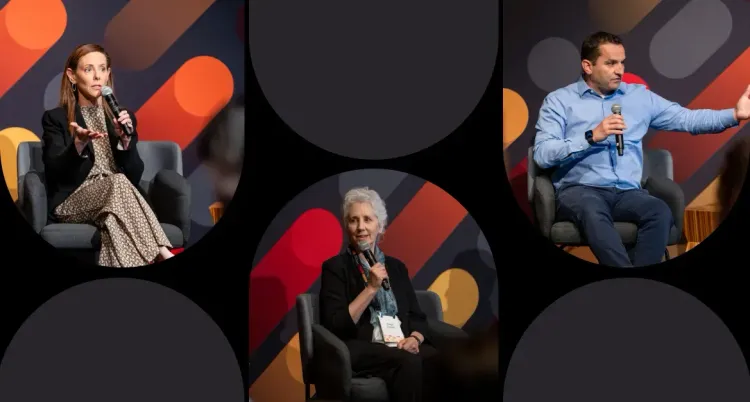
Scaling impact by standardizing data: A conversation on how better analytics and collaboration can unlock more investment for community lending
Having more consistent definitions and standards about community lending data is one of the six shifts identified in our survey of small business support leaders.
High tech, high touch: How community lenders use digital tools to stay personal with small businesses
By Araba Sapara-Grant Maria worked in the flower district in Manhattan for many years, but her dream of opening her own mobile flower shop seemed untenable.
Built for all, built to last: Six shifts that could change the U.S. small business landscape for generations of entrepreneurs
Six key shifts—from flexible capital to stronger partnerships—could transform the U.S. small business ecosystem and improve long-term entrepreneur success.

Funding creativity, fueling small business growth: Bridging the capital gap in the creative economy
The creative economy is one of the worlds fastest growing sectors, representing $2 trillion in economic activity globally and potentially comprising 10% of GDP by 2030.

Improving small business outcomes through mental health: A profile on Our Village United’s holistic model
How Our Village United’s ELEVATE program combines wellness, funding, and mentorship to help underserved entrepreneurs grow resilient, scalable small businesses.

Embracing an abundance mindset in Kansas: How new collaborations are creating a stronger small business ecosystem
The fifth Mastercard Strive USA Summit recently took place in Lawrence, Kansas in partnership with the Kansas Department of Commerce.
From theory to practice to scale: Mastercard Strive USA’s impact on small businesses in year 2
Mastercard Strive USA significantly grew its portfolio, impact, and voice in Year 2 and set the stage for strengthening small business ecosystems further in Year 3.

Challenging assumptions: How a distinct operations model sets CDFIs apart in a vast financial ecosystem
Discover how Community Development Financial Institutions (CDFIs) provide mission-driven financing, expand access to capital, and help underserved entrepreneurs grow sustainable businesses in the U.S.

Why helping small businesses succeed should be a philanthropic priority
To create an equitable economy, grantmakers should address the financial and training hurdles that cause so many entrepreneurs to fail.
Getting impact capital off the sidelines: how CNote aligns investor interests with community financial institutions — and vice versa
A two-year Mastercard Strive USA grant has paved the way for investment platform CNote to strengthen their organizational capacity.
The unique partnership at the center of California’s new loan match program
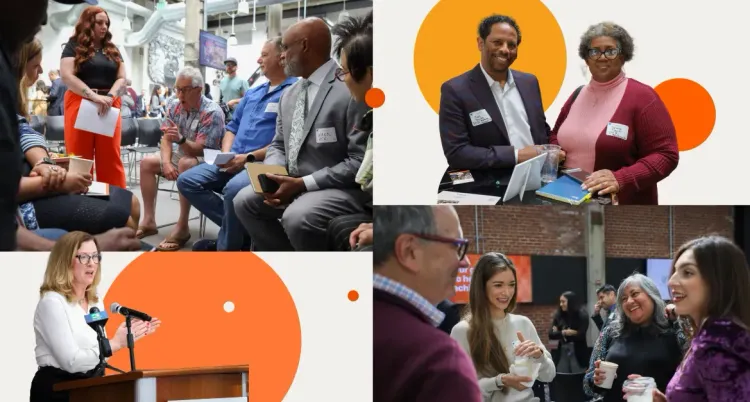
A unique and first-time partnership between two mission-driven organizations, Next Street and Community Reinvestment Fund USA.
How local government can help more small businesses succeed: A fireside chat between St. Louis Mayor Tishaura O. Jones and Salah Goss of Mastercard
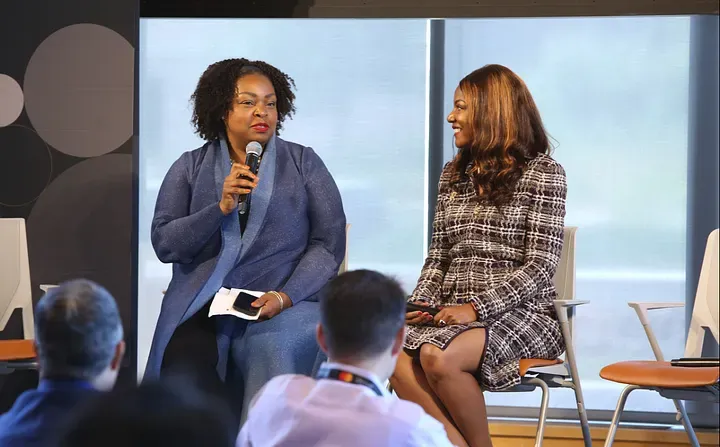
This conversation on the role of local government in helping small businesses succeed took place at the Mastercard Strive USA Summit in St. Louis, Missouri, between Tishaura O.
Inclusive growth for entrepreneurs in North Carolina — and beyond
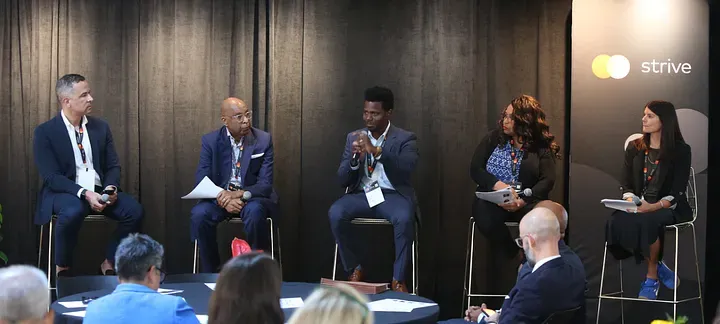
This article highlights key themes and moments from the fourth Mastercard Strive USA Summit held in Raleigh, North Carolina.
Behind the headlines: The critical role of credit unions in deploying $27 billion in federal…
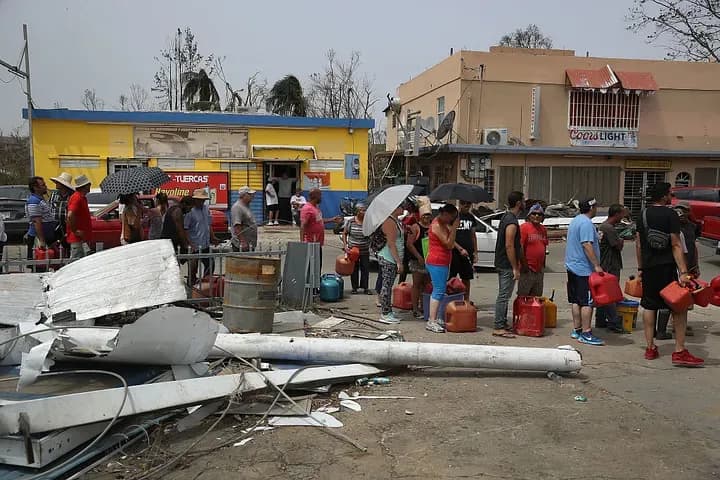
Inclusiv will serve as a critical backdrop as it moves forward with its recent $1.87 billion Greenhouse Gas Reduction Fund Clean Communities Investment Accelerator grant.
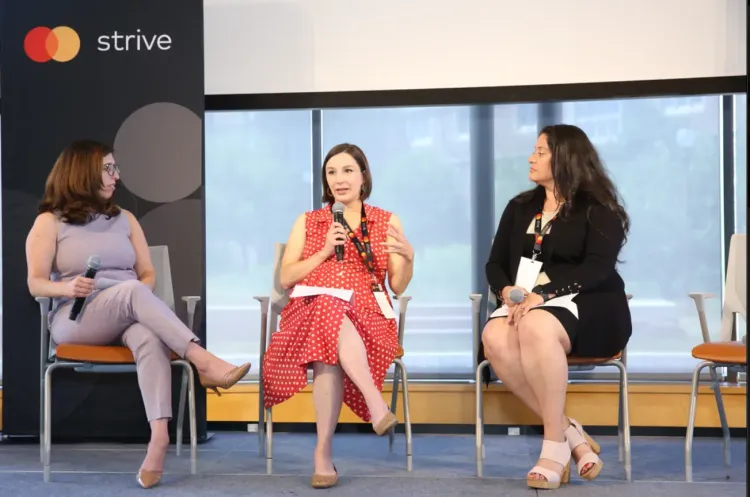
Opening doors and connecting dots: How the small business ecosystem in Missouri is meeting entrepreneurs where they are
This article highlights key themes and moments from the third Mastercard Strive USA Summit held in St. Louis, Missouri.
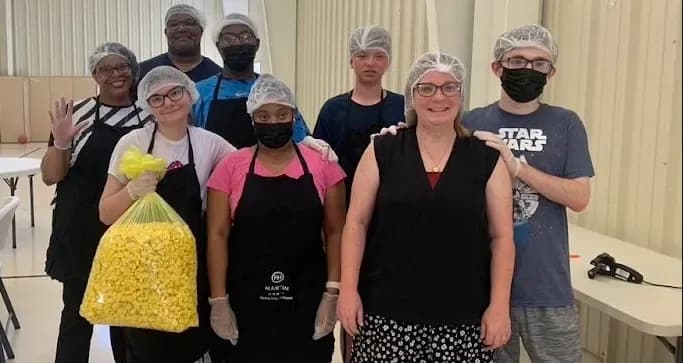
Meeting small businesses where they are: Technical assistance models that work in an increasingly complex landscape
The technical support entrepreneurs need to launch and grow their businesses can vary widely.
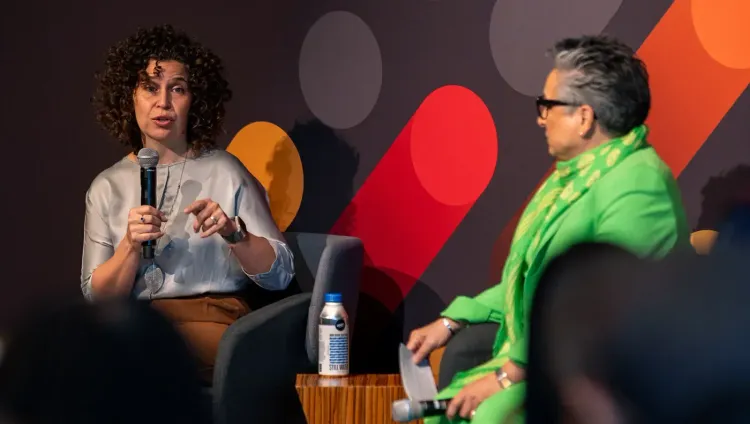
How trust scales impact: The role of local partners in federal programs for small businesses
This article highlights key themes and moments from the second Strive USA Summit in Washington, DC, on April 17, 2024.
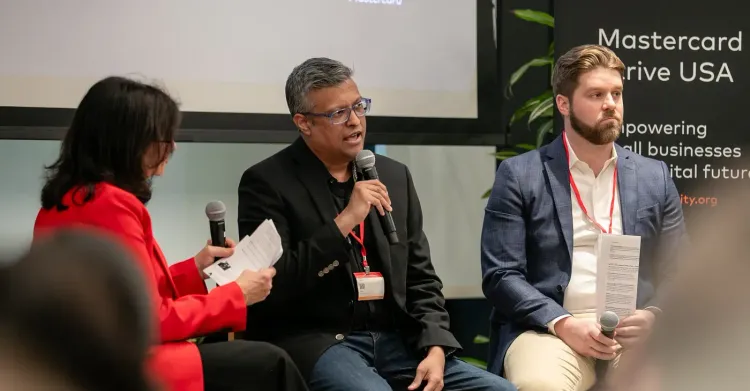
Public-private partnerships and small businesses: A conversation on what is working in New York City
This conversation took place at the Mastercard Strive USA Summit in New York City between Kevin D.
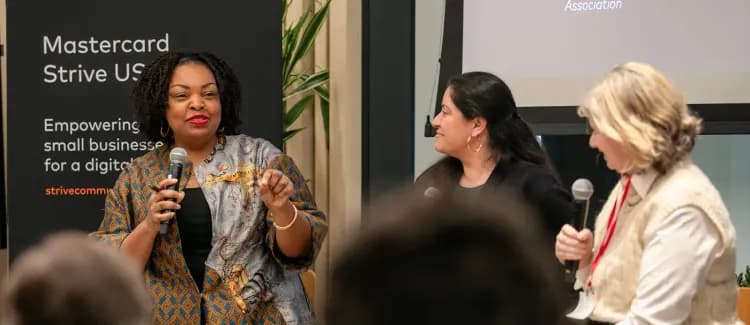
Building bridges for small businesses: Highlights from the inaugural Strive USA Summit in New York
Participants at the first Mastercard Strive USA Summit spoke about how to access and leverage the once-in-a-generation investments being made by the federal government.